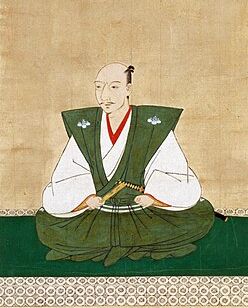
Oda Nobunaga is one of the most important figures in Japanese history.
During the Sengoku period, Japan was divided among many competing warlords. Nobunaga became famous for his military ability, political reforms, and efforts to unify the country.
Although he did not complete the unification of Japan himself, his actions changed the political structure of the country and influenced the future of Japan.
This article explains the life of Oda Nobunaga, from his early years to his death at Honno-ji.
- The Sengoku Period and the World Nobunaga Was Born Into
- Nobunaga’s Early Life
- The Battle of Okehazama
- Alliance with Tokugawa Ieyasu
- Entering Kyoto and Supporting the Shogunate
- Conflict with the Saito Clan
- Conflict with the Azai and Asakura Clans
- Conflict with the Takeda Clan
- Wars Against Religious Forces
- The Incident at Honno-ji
- Significance of Nobunaga’s Wars
- Military Innovation and the Use of Firearms
- Economic and Political Policies
- The Unification of Japan
- Nobunaga’s Legacy
- Conclusion
The Sengoku Period and the World Nobunaga Was Born Into
Oda Nobunaga was born in 1534 during the Sengoku period.
This was a time of constant warfare in Japan. The authority of the Ashikaga shogunate had weakened, and regional daimyo fought each other for land and power.
Many castles were built during this period, and military conflicts were common across the country.
Nobunaga was born into the Oda clan, a local warrior family in Owari Province, located in present-day Aichi Prefecture.
Nobunaga’s Early Life
Nobunaga was the son of Oda Nobuhide, a powerful local lord.
As a young man, Nobunaga was known for unusual behavior and was sometimes called “The Fool of Owari.”
He often ignored social expectations and behaved differently from other nobles and warriors.
However, after the death of his father, Nobunaga gradually strengthened his position within the Oda clan.
He defeated rival family members and expanded his control over Owari Province.
The Battle of Okehazama
One of the most famous events in Nobunaga’s life was the Battle of Okehazama in 1560.
At that time, the powerful daimyo Imagawa Yoshimoto marched toward Kyoto with a large army.
Nobunaga’s forces were much smaller.
Despite this disadvantage, Nobunaga launched a surprise attack during a storm and defeated the Imagawa army.
Imagawa Yoshimoto was killed in the battle.
This victory greatly increased Nobunaga’s reputation and made him one of the major daimyo of the Sengoku period.
Alliance with Tokugawa Ieyasu
After Okehazama, Nobunaga formed an alliance with Tokugawa Ieyasu.
This alliance became one of the most important political relationships of the Sengoku period.
Together, they strengthened their positions in central Japan.
The alliance also helped Nobunaga focus on expansion toward Kyoto.
Entering Kyoto and Supporting the Shogunate
In 1568, Nobunaga entered Kyoto with military forces.
He supported Ashikaga Yoshiaki and helped him become shogun.
At first, Nobunaga acted as a supporter of the shogunate. However, conflicts soon developed between Nobunaga and Yoshiaki.
Eventually, Nobunaga removed Yoshiaki from Kyoto in 1573.
This event effectively ended the Ashikaga shogunate.
Conflict with the Saito Clan
One of Nobunaga’s early major conflicts was against the Saito clan of Mino Province.
At first, Nobunaga attempted to strengthen relations through marriage.
He married Nohime, the daughter of Saito Dosan, the ruler of Mino.
However, after Dosan was defeated and killed by his son Saito Yoshitatsu, relations between the Oda and Saito clans worsened.
After years of fighting, Nobunaga finally captured Inabayama Castle in 1567.
He renamed the area “Gifu.”
The conquest of Mino was important because it gave Nobunaga a strong base for advancing toward Kyoto.
Conflict with the Azai and Asakura Clans
After entering Kyoto, Nobunaga faced resistance from several powerful daimyo.
Among the most important were the Azai clan and the Asakura clan.
The Azai clan ruled northern Omi Province, while the Asakura clan controlled Echizen Province.
At first, Nobunaga and the Azai clan were connected through marriage.
Nobunaga’s sister, Oichi, married Azai Nagamasa.
However, when Nobunaga attacked the Asakura clan, Nagamasa chose to support the Asakura family instead of Nobunaga.
This betrayal created a dangerous military situation for Nobunaga.
One famous event during this conflict was Nobunaga’s retreat from Kanegasaki in 1570.
Nobunaga narrowly escaped encirclement and retreated successfully with the help of his allies.
Later that same year, Nobunaga fought against the Azai and Asakura forces at the Battle of Anegawa.
Together with Tokugawa Ieyasu, he defeated the allied armies.
The conflict continued for several years.
Finally, in 1573, Nobunaga destroyed both the Azai and Asakura clans.
Azai Nagamasa died after the fall of Odani Castle.
The destruction of these clans greatly strengthened Nobunaga’s control in central Japan.
Conflict with the Takeda Clan
The Takeda clan was one of the strongest military powers of the Sengoku period.
Takeda Shingen, the head of the clan, was especially famous for his cavalry and military skill.
Nobunaga viewed the Takeda clan as a major threat.
In 1572, Takeda Shingen launched a military campaign toward Kyoto.
During this campaign, Takeda forces defeated Tokugawa Ieyasu at the Battle of Mikatagahara.
This defeat shocked Nobunaga’s side and demonstrated the strength of the Takeda army.
However, Shingen died in 1573 before completing his campaign.
After Shingen’s death, leadership passed to his son Takeda Katsuyori.
In 1575, Nobunaga and Tokugawa Ieyasu fought the Takeda clan at the Battle of Nagashino.
Nobunaga’s forces used large numbers of firearms and defensive barricades.
The Takeda cavalry suffered heavy losses.
The battle became famous as an example of changing military tactics in Japan.
Several years later, the Takeda clan collapsed completely.
Wars Against Religious Forces
Nobunaga also fought against powerful religious groups.
Some Buddhist institutions possessed armies, fortresses, and political influence.
One major opponent was the Ikko-ikki movement.
These groups were formed by monks, local warriors, and common people who resisted samurai rule.
Nobunaga launched long campaigns against them, especially around Osaka and central Japan.
He also attacked the Enryaku-ji temple complex on Mount Hiei in 1571.
Nobunaga considered these religious forces military and political threats to his authority.
The Incident at Honno-ji
In 1582, Nobunaga stayed at Honno-ji temple in Kyoto with only a limited number of guards.
One of his generals, Akechi Mitsuhide, suddenly betrayed him.
Mitsuhide’s forces attacked Honno-ji.
With no realistic chance of escape, Nobunaga died during the incident.
The exact reasons for Mitsuhide’s betrayal remain unclear and continue to be debated by historians.
Significance of Nobunaga’s Wars
Through continuous warfare, Nobunaga defeated many of the strongest powers of the Sengoku period.
His victories allowed him to expand his territory and weaken traditional political structures.
Although he died before unifying Japan completely, his campaigns created the foundation for national unification under Toyotomi Hideyoshi and Tokugawa Ieyasu.
Military Innovation and the Use of Firearms
Nobunaga is often associated with military innovation.
During the 16th century, firearms introduced by Portuguese traders spread through Japan.
Nobunaga used firearms effectively in battle and supported organized tactics involving large numbers of gun units.
One of the most famous examples was the Battle of Nagashino in 1575.
In this battle, Nobunaga and Tokugawa Ieyasu fought against the Takeda clan.
Their forces used firearms and defensive positions to defeat Takeda cavalry attacks.
Although traditional weapons such as swords and spears remained important, firearms increasingly influenced warfare during this period.
Economic and Political Policies
Nobunaga also introduced important economic and political reforms.
He encouraged free trade in some areas by reducing restrictions on markets and commerce.
Castle towns developed under his rule, helping economic activity grow.
Nobunaga also weakened the influence of certain religious institutions that possessed military power.
Some Buddhist groups had large armies and controlled territory.
Nobunaga saw them as political and military threats.
This led to several conflicts, including campaigns against militant religious groups.
The Unification of Japan
By the late 1570s and early 1580s, Nobunaga controlled much of central Japan.
Many daimyo either allied with him or were defeated by his forces.
Although Japan was not yet fully unified, Nobunaga had become the dominant political and military figure in the country.
Nobunaga’s Legacy
Although Nobunaga died before completing the unification of Japan, his work continued through Toyotomi Hideyoshi and Tokugawa Ieyasu.
Hideyoshi completed most of the unification process, and Ieyasu later established the Tokugawa shogunate.
Nobunaga is remembered as a major figure of the Sengoku period because of his military success, political reforms, and role in transforming Japan.
He helped weaken old political structures and created conditions for the eventual unification of the country.
Conclusion
Oda Nobunaga was one of the most influential daimyo in Japanese history.
Born during a time of constant warfare, he expanded his power through military victories, alliances, and political reforms.
His defeat of powerful rivals and support for new military methods changed the balance of power in Japan.
Although his life ended suddenly at Honno-ji, his influence continued long after his death.
Today, Nobunaga remains one of the best-known figures of the Sengoku period and an important symbol of change and unification in Japanese history.
Comments